Search for mold online and you will quickly find the phrase toxic mold. It sounds alarming, and it is often used to sell services. Here is what the term actually means, what it does not and how a careful cleanup works for families in the Lakeland area.
Official source
Plain answers about mold and health are on the Florida Department of Health mold information.
Is toxic mold a scientific term?
No. It is a popular phrase usually used for molds that can produce mycotoxins, such as Stachybotrys. Whether a specific mold growth is producing mycotoxins, and whether that affects anyone's health, cannot be determined from color or species alone.
Related service >>
- Toxic Mold Removal in Lakeland, FL
What People Mean by Toxic Mold
Some molds can produce substances called mycotoxins under certain conditions. Stachybotrys, the mold often called black mold, is the best known example. But the presence of a mold type that can produce mycotoxins does not mean it is producing them, or that the levels in a home are harmful.
Toxic mold is therefore a popular label rather than a lab category. Mold testing can identify types of mold, but it cannot tell you whether the mold in your house is making anyone sick. That question needs a different expert.
Health Concerns Go to a Doctor
Mold exposure can cause symptoms such as nasal congestion, coughing, wheezing, eye irritation or skin irritation, especially in people with allergies or asthma. People with weakened immune systems or lung disease may face greater risk. If anyone in your household has symptoms you think may be related to mold, talk to a doctor.
A mold provider can help you understand the extent of growth in your home and how to remove it safely. Be cautious of anyone who makes medical claims, promises health results or uses fear to push a larger job than the inspection supports.
How Abatement Is Done
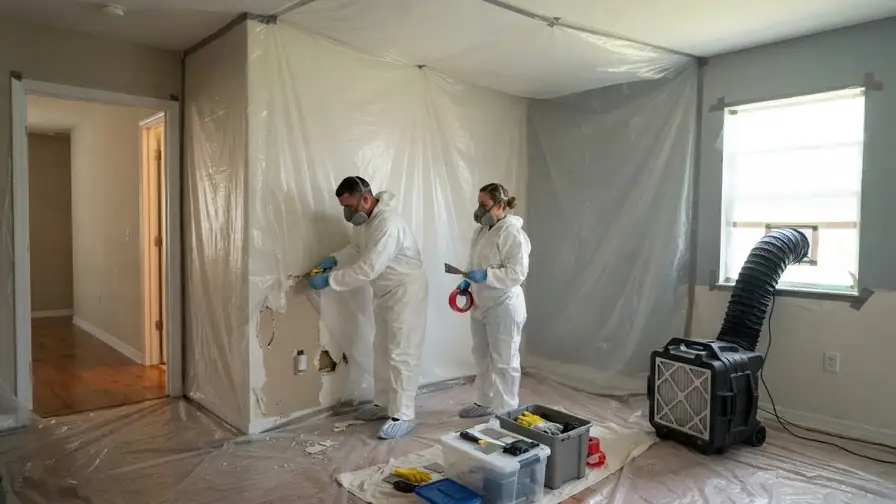
Mold abatement is another word for remediation. Regardless of the species, the process for significant growth follows the same steps: contain the area with plastic sheeting and negative air, remove porous materials with growth, HEPA vacuum and clean surfaces, dry the area and fix the moisture source.
Workers wear protective equipment such as respirators, gloves and coveralls. Waste is bagged inside the containment and removed sealed. Afterward, many homeowners choose clearance testing by an independent assessor to confirm the area is back to normal conditions before rebuilding.
Focus on Moisture and Safe Removal
Whatever the mold is called, the answer is the same: find and fix the moisture, then remove the growth safely. Leave health questions to your doctor and look for a provider who explains the process clearly. That approach protects your Lakeland family better than any scary label.