Toxic mold is a phrase that gets a lot of attention online, and it can make a mold problem feel more frightening than it needs to. Some molds can produce substances called mycotoxins, but the cleanup approach is the same careful process used for any indoor mold. We connect Lakeland households with an independent provider for mold abatement and help you separate the facts from the scary headlines.
What Toxic Mold Means
Toxic mold is a popular name, not a scientific category. Certain molds, including some Stachybotrys, Aspergillus and Penicillium species, can produce mycotoxins under the right conditions. Whether a particular patch is producing them, and how much, is not something you can tell by looking.
The CDC notes that the presence of mold, rather than its specific type, is what matters for cleanup, and that any mold growing indoors should be removed. That keeps the focus where it belongs: on finding the moisture, removing the growth and making sure it does not come back.
Health Questions Belong With a Doctor
Mold can affect people differently. Some people notice a stuffy nose, coughing, itchy eyes or wheezing, and people with asthma, allergies or weakened immune systems may be more sensitive. If anyone in your home has symptoms you think could be related to mold, talk with a doctor.
A mold provider is not a medical professional and should not diagnose illness or promise health outcomes. What they can do is tell you where the mold is, how extensive it is and how they will remove it safely. If your doctor asks for testing, mention it when you call so the sampling plan can match what your doctor needs.
How Mold Abatement Is Done
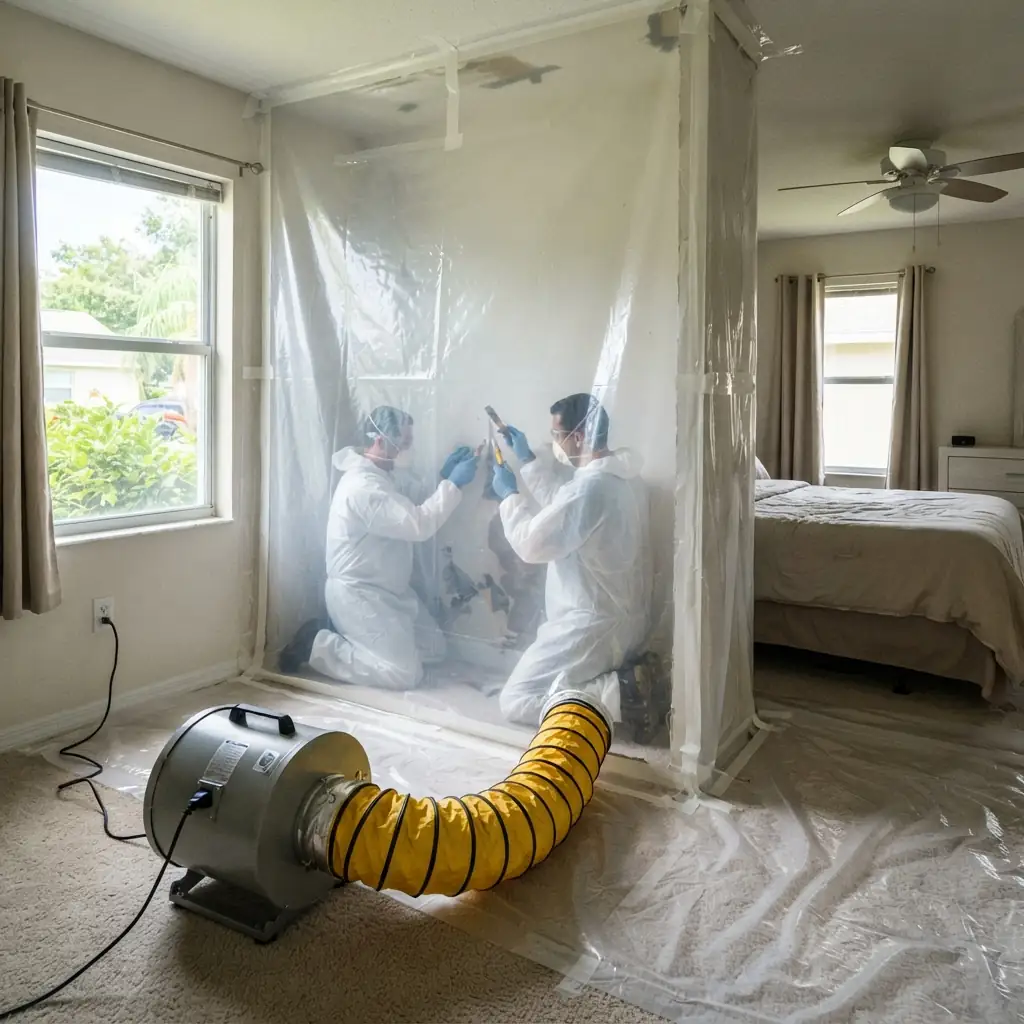
Mold abatement is another word for removal done under controlled conditions. On a residential job it includes:
- Containment with sealed plastic and covered vents
- Negative air pressure using a HEPA air scrubber
- Protective gear for workers, including respirators
- Removal and bagging of contaminated porous material inside the work area
- HEPA vacuuming and cleaning of framing and hard surfaces
- Drying and a final check before the area is reopened
For sensitive households, ask how the provider will protect the rest of the home protected and whether you should stay elsewhere while the work is underway.
Taking the Next Step Calmly
If you are worried about toxic mold, start with the basics: where is it, what is it growing on and what water fed it? Keep the area closed, avoid disturbing it and mention any health concerns when you call. A provider can explain the abatement plan, and your doctor can address the medical side. Together that covers both questions.