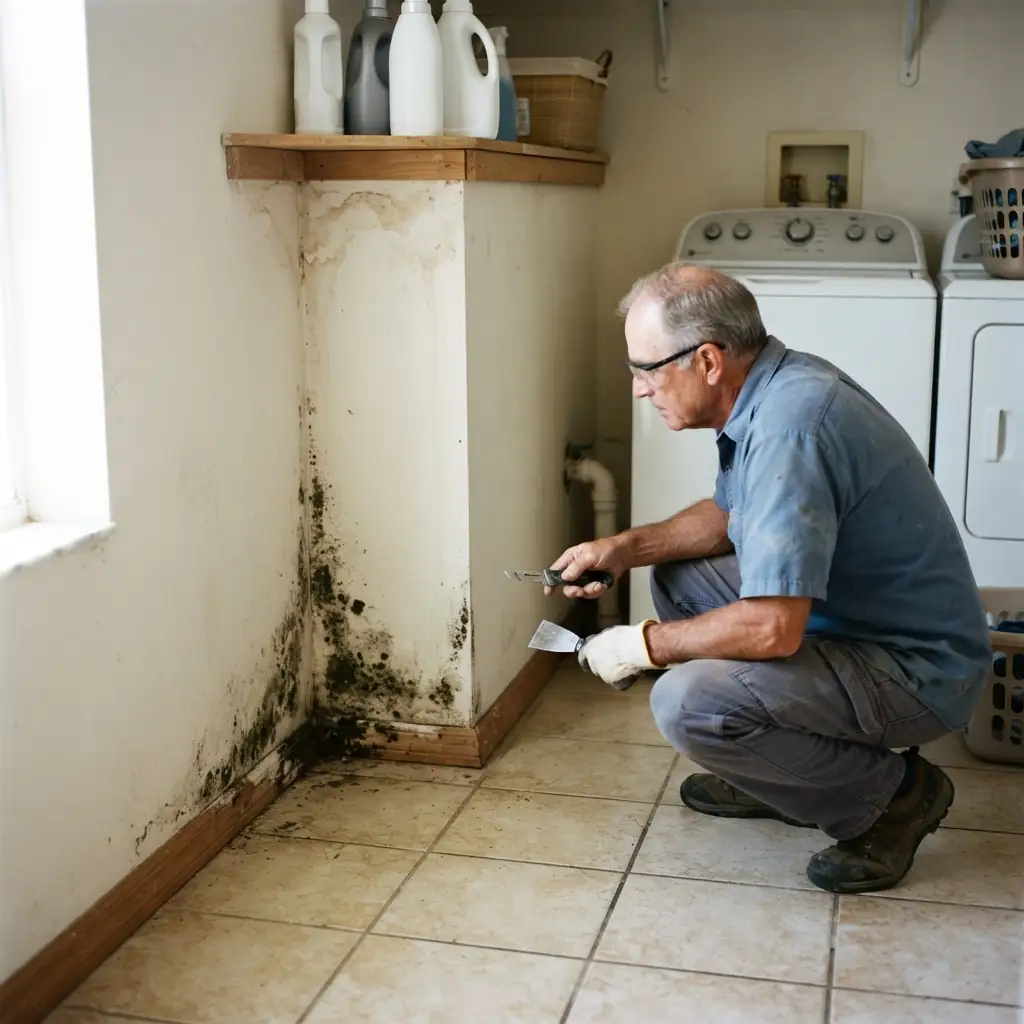
Few phrases worry a homeowner more than black mold. Dark green or black growth shows up often in Lakeland homes, on drywall behind a leaking water heater, on bathroom ceilings or around AC closets. We connect you with an independent provider who can look at it calmly, figure out what is feeding it and remove it with the right level of care.
What People Mean by Black Mold
Black mold usually refers to Stachybotrys chartarum, a greenish black mold that grows on materials that stay wet for a long time, especially paper-faced drywall and ceiling tile. But many other common molds also look dark, including Cladosporium, which is everywhere outdoors in Florida.
You cannot tell the species by looking at it. A surface sample sent to a lab can identify it, but in most cases identification does not change what needs to happen. Any mold growing indoors on building materials should be removed, and the moisture behind it fixed. The CDC and EPA both take that position, which keeps the focus on cleanup rather than on the color.
How Dark Growth on Drywall Is Removed
Stachybotrys and other dark molds that appear on drywall usually mean the material has been wet for days or weeks. Paper-faced drywall cannot be cleaned once mold grows into it, so the affected section is removed, typically with a margin past the visible edge.
- The area is contained and put under filtered negative air
- Damaged drywall and insulation are bagged inside the containment
- Studs and plates are HEPA vacuumed and cleaned
- Framing is dried and checked before new drywall goes up
If the growth is on tile, glass or another hard surface, cleaning may be enough. The provider will tell you which materials can stay.
Keeping Your Household Safe Meanwhile
Until the area is cleaned, it is sensible to keep the room closed and avoid scrubbing, sanding or spraying bleach on the growth, which can spread spores and leave the moisture problem untouched. If anyone in the home has asthma, allergies or lowered immunity, mention it when you call so the provider can plan containment with that in mind.
Health questions about mold exposure belong with a doctor. What the provider can do is remove the growth, fix or flag the water source and show you that the space is clean and fully dry before it is closed up again.
Next Steps for Dark Mold
If you have found dark mold, take a few photos, note any recent leaks and keep the room closed. Do not try to sand or bleach it away. When you call, describe what the growth is on and roughly how large the area is. That is enough for a provider to suggest whether testing is useful and how the removal would be handled.