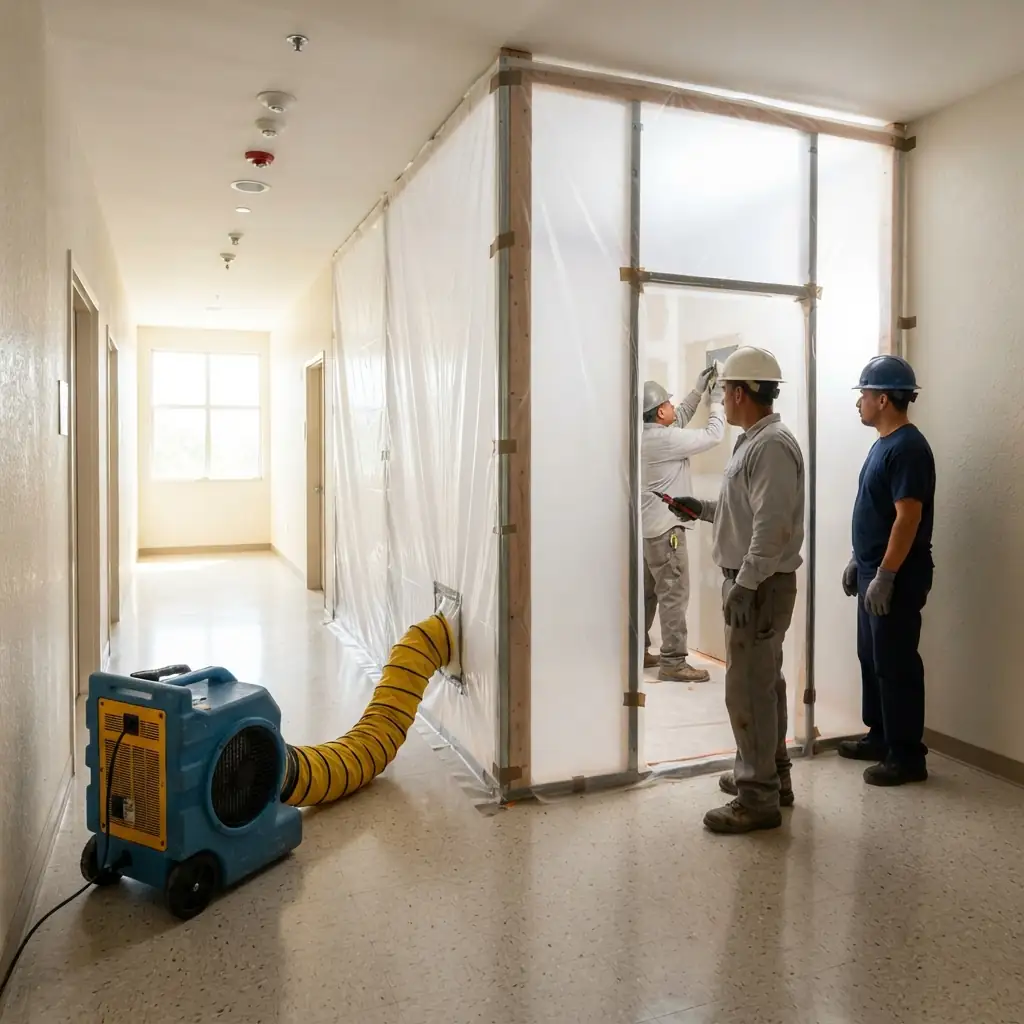
Remediation is the full process of bringing a moldy area back to a normal condition, not just scrubbing off what you can see. It covers containment, cleanup, drying and proof that the space is ready to use again. We help Lakeland homeowners reach an independent provider for this work and explain what a solid remediation plan looks like so you can compare proposals with confidence.
How Containment Protects the Rest of the House
Disturbing mold releases spores. Containment keeps them in the work area. On a typical residential job the provider hangs plastic sheeting from floor to ceiling, tapes the seams, covers supply and return vents and sets up a HEPA air scrubber that draws air out of the space. That slight negative pressure means air moves into the work zone and not out of it.
For a small closet or a section of bathroom wall, containment may be a simple sealed enclosure. For a whole room or several rooms, it may include a zippered doorway and a decontamination area where workers remove protective suits. Ask how the provider plans to contain your job and how they will protect the rest of the home in use while the work goes on.
Remediation Versus Removal: Same Job, Different Words
Many companies use the two terms interchangeably. In Florida law, mold remediation means the removal, cleaning, sanitizing or demolition of mold-contaminated matter over 10 square feet. In everyday use, removal tends to describe the tear-out and remediation tends to describe the whole process from containment to clearance.
The label matters less than the scope. A proposal should list the rooms, the square footage, the materials to be removed, the cleaning method for what stays, how the area will be dried and how the result will be checked. If two quotes for the same house look very different in price, the scope is usually where the difference hides.
Clearance: Knowing the Work Is Finished
A clearance check confirms that the remediation did what it set out to do. It usually includes a visual inspection for remaining growth or dust, moisture readings to show the materials are dry and, in many cases, air or surface samples that go to a lab.
Florida keeps assessment and remediation separate on purpose. Under state rules, a mold remediator may not assess a structure that the same remediator or its company worked on in the previous 12 months. Many homeowners bring in an independent assessor for the clearance step for that reason. Once clearance passes, the containment comes down and rebuilding, painting or flooring can begin.
Comparing Remediation Proposals
When you have a proposal in hand, read it for the scope rather than the total. Check that containment, removal, cleaning, drying and clearance are each described. Make sure the moisture source is named and that the proposal says who fixes it. If something is missing, ask before you sign. A clear proposal protects you and the provider.