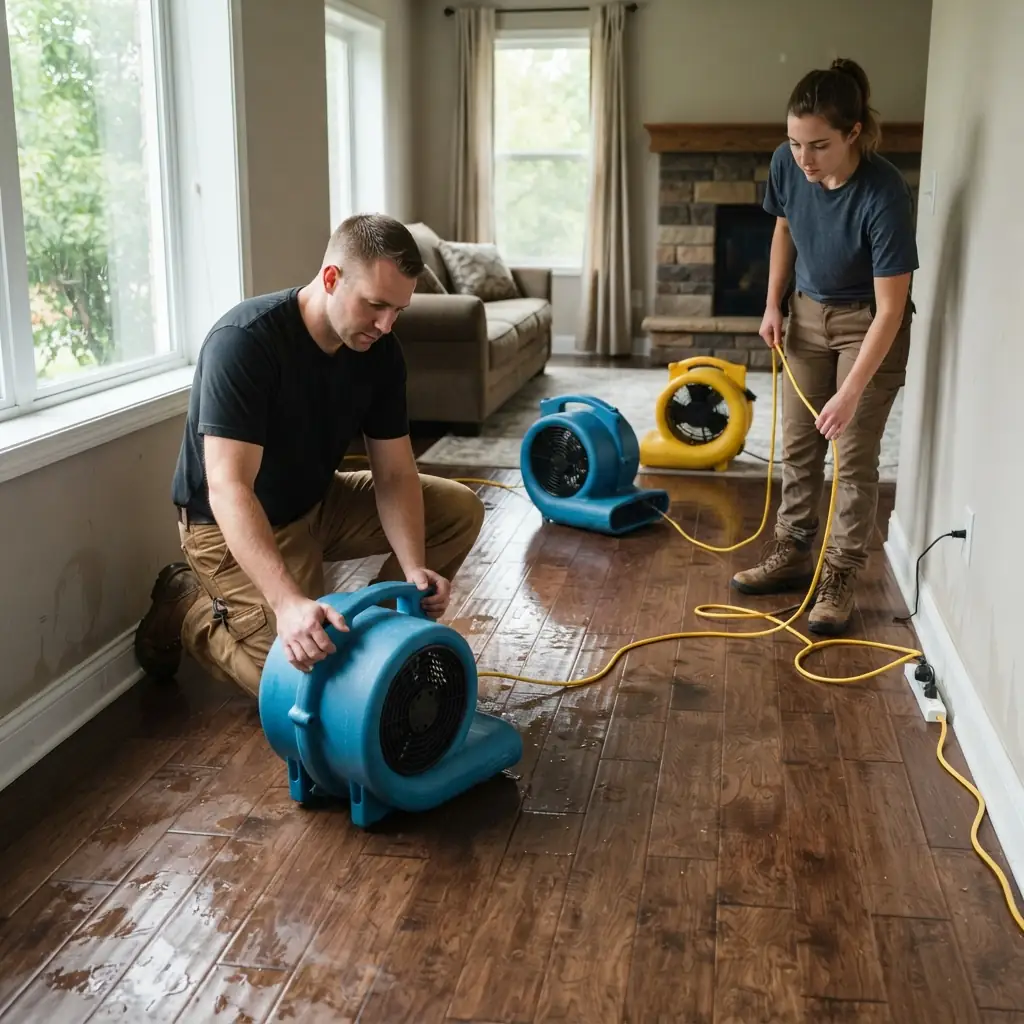
Water inside the house is a race against mold. After a storm, a burst supply line or an overflowing AC pan, wet drywall, carpet and furniture can start growing mold within a few days. We connect Lakeland homeowners with an independent provider for urgent mold and water situations and explain the first steps you can take while you wait.
First Steps After Water Gets Inside
Safety comes first. If water has reached outlets or the electrical panel, keep clear and call the power company or an electrician. Then focus on stopping the water and limiting the damage:
- Shut off the water main if a pipe or fixture is leaking
- Take photos and video of every wet room before moving anything
- Move furniture, rugs and boxes off wet floors
- Run the AC and fans if it is safe to use power
- Call your insurance company to open a claim
Write down when the water started and when it stopped. Your insurer and the provider will both ask.
Why Drying Comes Before Mold Removal
The EPA advises drying water-damaged areas and items in the first day or two to prevent mold growth. In Lakeland's heat and humidity, wet materials do not dry on their own very quickly, especially inside walls or under flooring.
Professional drying uses moisture meters to map how far the water spread, air movers and dehumidifiers to pull water out of the structure and sometimes small holes or removed baseboards to dry inside walls. If growth has already begun, the affected areas are contained and removed while drying continues. Drying first, and well, keeps a water problem from becoming a much larger mold problem.
What to Keep and What to Throw Out
Porous items that stayed wet for more than a day or two, or that touched flood or sewage water, are hard to save. That usually includes carpet pad, upholstered furniture, mattresses, stuffed toys, paper and cardboard. Drywall and insulation that soaked up water typically come out at least to the height of the water line.
Hard items such as metal, glass, solid wood furniture and hard plastic can often be cleaned and dried. Photograph anything you throw away and keep a list for your claim. If you are unsure about an item, set it aside in a dry area and ask the provider.
After the First Day
Once the water is stopped and documented, the goal is a thorough dry-out and a check for mold in the days that follow. Keep an eye on baseboards, the bottom of walls and closets for staining or a musty smell. If you see either, call before you start rebuilding. Sealing a damp wall is the most common way a small water problem becomes a costly mold job.